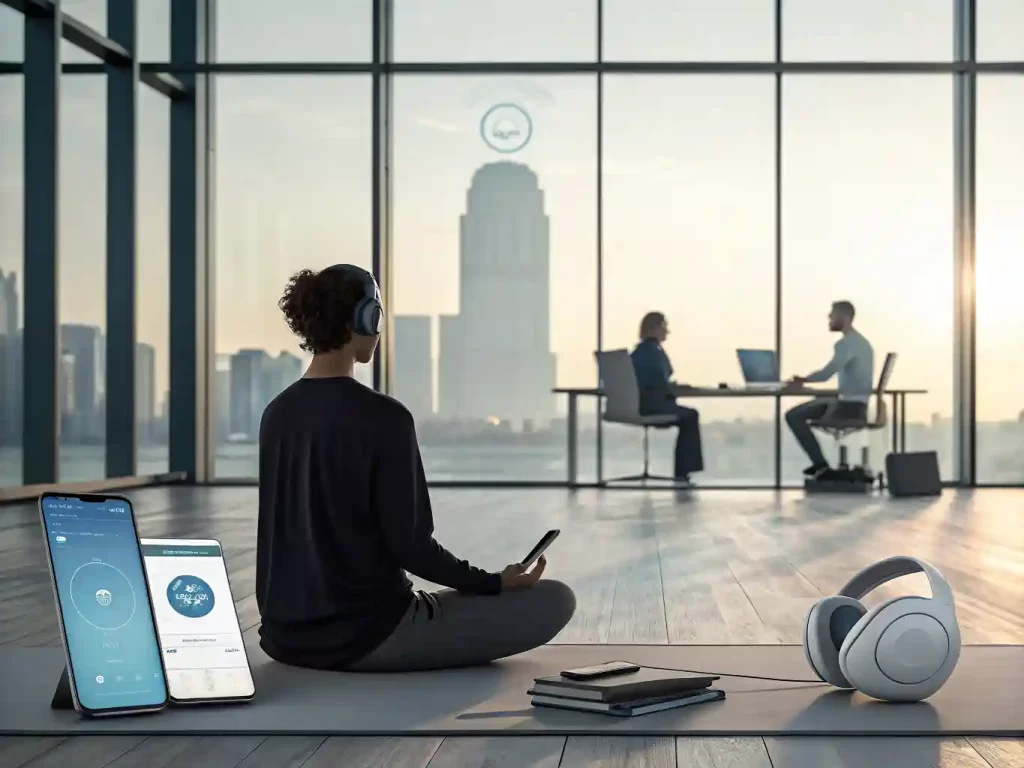
Stress has become one of the most familiar words in modern working life, yet it is still often treated too late. People usually start thinking about stress when sleep is already broken, concentration is fading, irritability is rising, and the body is sending clear signals that recovery is no longer keeping pace with pressure. Digital stress prevention changes this logic. Instead of waiting for burnout, it gives people tools to notice tension earlier, understand their personal patterns, and build small protective habits before stress turns into a serious problem.
The strongest value of digital prevention is not in replacing doctors, therapists, managers, or healthy workplace culture. Its value lies in everyday support. A breathing app used during a difficult afternoon, a wearable that shows poor recovery after several intense days, a corporate wellbeing platform that helps teams spot overload trends, or a neurogadget that teaches relaxation through biofeedback can all make stress more visible. When stress becomes visible, it becomes easier to manage.
Why digital stress prevention matters
Stress is not only a personal feeling. It affects attention, decision-making, communication, sleep, immunity, motivation, and long-term productivity. In the workplace, chronic stress can quietly damage performance long before a person openly says they are struggling. Missed details, emotional exhaustion, delayed responses, low creativity, and growing cynicism are often early signs that pressure has stopped being productive.
Traditional stress management usually relies on individual discipline: sleep more, move more, take breaks, meditate, talk to someone, set boundaries. These recommendations are useful, but they can feel too abstract when a person is already tired. Digital tools make prevention more practical because they turn general advice into concrete actions. A notification can remind a person to pause after a long meeting block. A sleep tracker can show that late work messages are damaging recovery. A mindfulness app can guide a three-minute breathing practice instead of expecting someone to remember techniques by heart.
The key shift is from occasional self-care to continuous self-awareness. People do not need to become obsessed with numbers or monitor every body signal. The goal is simpler: to notice patterns that are easy to miss. A person may discover that stress rises not because of workload alone, but because workdays have no recovery gaps. Another may see that anxiety is worse after poor sleep. A manager may realize that one team has too many urgent requests compressed into the same two days every week.
Digital prevention also matters because stress is highly individual. Two people can face the same schedule and react differently. One may need more physical movement, another may need better sleep routines, another may benefit from breathing exercises, and another may require a serious conversation about workload. Digital tools help move away from one-size-fits-all wellness advice toward more personalized support.
Still, prevention only works when it is treated with maturity. Apps and gadgets cannot fix toxic leadership, unrealistic deadlines, financial insecurity, or constant interruptions. They are useful when they become part of a wider system that respects human limits. A meditation subscription is not a solution if employees are punished for disconnecting. A wearable dashboard is not wellbeing if people feel watched. Real prevention begins when technology supports people rather than pressuring them to optimize themselves endlessly.
Stress apps and everyday self-regulation
Stress management apps are the most accessible part of digital prevention. They usually focus on breathing, meditation, mood tracking, cognitive techniques, sleep support, journaling, or short educational lessons. Their main advantage is availability. A person can use them at home, during a commute, between meetings, or after a difficult conversation. This makes them useful not only for people already experiencing severe stress, but also for those who want to build emotional resilience before problems become heavier.
The best apps work because they reduce friction. When someone is stressed, complex advice is hard to follow. A good app gives a clear next step: breathe with this rhythm, write down what triggered the reaction, name the emotion, stretch for two minutes, listen to a short body scan, or prepare for sleep without scrolling. These small actions may look modest, but repeated regularly they train the nervous system to shift out of constant tension.
Mood tracking can be especially powerful when it is simple. People often underestimate how strongly their emotions are linked to sleep, food, workload, screen time, social conflict, and physical movement. A short daily check-in helps identify repeated triggers. For example, a person may notice that anxiety spikes every Sunday evening, that energy drops after back-to-back video calls, or that irritability grows when lunch is skipped. This awareness is not a cure, but it gives a starting point for change.
Breathing and meditation apps are useful because they provide structure. Many people know that deep breathing can help, but they do not know which rhythm to use or how long to practice. Guided exercises remove that uncertainty. Slow breathing, progressive muscle relaxation, and short mindfulness sessions can help calm physiological arousal. They are not magic buttons, yet they can interrupt the cycle where stress creates faster breathing, faster breathing increases tension, and tension makes thoughts feel more urgent.
Journaling features can also support stress prevention, especially when they are designed around reflection rather than endless self-analysis. Writing down worries, naming priorities, or separating facts from assumptions can reduce mental overload. Some apps use cognitive behavioral techniques to help users challenge catastrophic thinking. This can be helpful when stress is fueled not only by real demands, but also by internal pressure, perfectionism, or fear of disappointing others.
The main risk is overdependence. An app should not become another task that creates guilt. If a user misses a meditation streak and feels like a failure, the tool is working against its purpose. Healthy digital prevention should be flexible, forgiving, and realistic. A useful app fits into life; it does not demand that life revolve around it.
There is also a privacy issue. Stress data can be sensitive because it may reveal emotional states, sleep problems, health routines, and work difficulties. Before using an app, people should check what data is collected, whether it is shared with third parties, whether it can be deleted, and whether the company uses clear privacy settings. Convenience should not require giving away intimate information without understanding how it may be used.
Neurogadgets, wearables and biofeedback
Neurogadgets and wearables bring stress prevention closer to the body. While apps often rely on self-reporting, devices can track signals such as heart rate, heart rate variability, sleep duration, movement, breathing patterns, skin temperature, or electrodermal activity. Some neurofeedback devices also use sensors to estimate brain activity and guide users toward calmer states through sound, visuals, or game-like exercises.
The appeal is obvious: stress becomes measurable. Many people only notice stress when it is already intense, but the body often shows signs earlier. Resting heart rate may rise. Sleep may become lighter. Recovery may decline. Muscles may stay tense. A wearable can show that the body has not fully recovered, even when the person mentally insists that everything is fine.
Heart rate variability, often called HRV, is one of the most discussed metrics in stress tracking. In simple terms, it reflects variation in time between heartbeats and is linked to the balance between activation and recovery in the nervous system. Higher HRV is often associated with better recovery and adaptability, while lower HRV may signal strain, poor sleep, illness, alcohol use, or accumulated fatigue. The number should not be interpreted in isolation, but trends over time can be useful.
Biofeedback devices can be even more practical because they teach self-regulation. A person sees or hears how their body responds during breathing, relaxation, or focus exercises. This creates a learning loop. Instead of simply being told to relax, the user observes what relaxation feels like physiologically. Over time, this can make it easier to recognize tension and reduce it without the device.
Neurofeedback tools are more complex. Some headbands and training systems claim to help users improve calmness, attention, or sleep by responding to brainwave patterns. The promise is attractive, but expectations should stay realistic. Consumer neurogadgets vary in quality, and not every claim is equally strong. They may be useful for relaxation training, but they should not be treated as medical devices unless they are properly validated and used under professional guidance.
The same caution applies to wearables. A stress score can be helpful, but it is not a diagnosis. A low recovery score does not automatically mean something is wrong, and a good score does not mean a person is emotionally fine. Measurements can be affected by device accuracy, sensor placement, illness, caffeine, alcohol, menstrual cycle changes, travel, and many other factors. The most useful approach is to look at patterns, not single numbers.
Digital body data can also create anxiety. Some users start checking stress metrics too often and become stressed by the tracking itself. This is known as the paradox of self-monitoring: the tool meant to calm the user becomes another source of pressure. Healthy use means checking trends periodically, connecting data to real habits, and avoiding obsessive interpretation.
The most responsible role of wearables and neurogadgets is to support better questions. Why is recovery worse after certain workdays? What happens to sleep after evening screen use? Does a short walk improve stress signals? Are breathing exercises actually helping? Good technology does not replace self-knowledge. It sharpens it.
Before choosing a digital stress prevention tool, it helps to compare what each category can realistically offer. The differences matter because not every person needs a gadget, and not every company needs a full platform.
| Tool type | Main purpose | Best use case | Main limitation |
|---|---|---|---|
| Breathing and meditation apps | Guided calming exercises | Quick stress reduction during the day | Benefits depend on regular use |
| Mood tracking apps | Emotional awareness and pattern recognition | Finding repeated triggers and habits | Self-reporting can be inconsistent |
| Sleep and recovery wearables | Tracking rest, strain, and recovery trends | Understanding how lifestyle affects stress | Data can be misread without balance |
| Biofeedback devices | Training body-based self-regulation | Learning to control breathing and tension | Quality and accuracy vary by device |
| Corporate wellbeing platforms | Supporting teams and organizational prevention | Offering resources and identifying overload patterns | Can feel intrusive if privacy is weak |
This comparison shows why digital prevention works best as a layered system. A simple app may be enough for someone who wants guided breathing. A wearable may suit someone who needs recovery insights. A company may need a platform, but only if it protects employee trust and leads to real workload improvements. The right tool is not the most advanced one; it is the one that supports a clear human need without creating new stress.
Corporate health and the new workplace responsibility
Corporate wellbeing has moved far beyond fruit baskets, gym discounts, and occasional wellness lectures. Employees now expect companies to take mental health seriously, and employers are beginning to understand that stress prevention is not a soft benefit. It is connected to productivity, retention, sick leave, engagement, reputation, and leadership quality.
Digital tools can help companies build more consistent wellbeing systems. A corporate platform may give employees access to mindfulness programs, therapy navigation, coaching, stress education, sleep support, or confidential assessments. It may also provide aggregated insights about workload pressure, burnout risk, or engagement trends. When used carefully, this information can help leaders notice problems before they become crises.
The word “carefully” is essential. Workplace stress data is sensitive. Employees must know what is private, what is anonymous, what managers can see, and how information will be used. If workers suspect that stress data may affect promotions, performance reviews, or job security, trust will collapse. People will avoid the tools or use them in a defensive way. Corporate health technology must be built around confidentiality, transparency, and voluntary participation.
A strong corporate approach also connects digital support with organizational change. It is not enough to give employees an app and leave the work system untouched. If stress is caused by unclear priorities, constant overtime, poor communication, understaffing, or unpredictable leadership, the company has to address those causes. Digital tools can reveal the pattern, but leadership must act on it.
Managers play a central role. A wellbeing platform may show that teams are overloaded, but employees experience stress through daily interactions: unclear tasks, urgent messages sent late at night, meetings without purpose, lack of autonomy, or fear of speaking openly. Training managers to recognize stress signals, plan workloads realistically, and create psychologically safe teams may have more impact than any app alone.
Good corporate stress prevention usually includes several practical layers:
• Clear boundaries around communication after working hours.
• Access to confidential mental health support.
• Workload reviews when teams show signs of overload.
• Training for managers on burnout prevention and healthy feedback.
• Flexible recovery options, such as focus time, meeting-free blocks, or planned breaks.
• Digital tools that employees can use voluntarily and privately.
These measures work because they combine individual support with structural responsibility. Employees get tools for self-regulation, while the company accepts that stress is not only a personal weakness or time-management issue. A healthy workplace does not ask people to become endlessly resilient in an unhealthy system. It reduces unnecessary pressure and gives people the resources to handle unavoidable pressure better.
Corporate digital health also needs cultural sensitivity. Different people respond differently to mental health language. Some employees may welcome meditation, while others may prefer sleep education, coaching, physical movement, or practical workload planning. The best programs offer choice. They do not force everyone into the same wellness identity.
The return on investment should also be understood broadly. Companies may look for lower absenteeism or higher productivity, but the deeper benefit is trust. When employees see that wellbeing tools are not decorative, they are more likely to speak earlier, ask for support, and stay engaged. Prevention is always cheaper than crisis management, but it only works when people believe the system is on their side.
Building healthy digital habits without overload
Digital stress prevention can fail when it becomes too complicated. A person downloads five apps, buys a wearable, subscribes to several programs, starts tracking sleep, mood, breathing, focus, and recovery, then feels overwhelmed by the amount of data. The result is the opposite of prevention. Instead of calm, there is another dashboard to manage.
The healthier approach is to start with one problem and one tool. If sleep is the weakest point, begin with a sleep routine and a simple tracker. If work anxiety is the main issue, try guided breathing or journaling. If the body feels constantly tense, biofeedback or short movement reminders may help. If a team is overloaded, the company should start with workload visibility and communication norms, not a complicated wellness platform.
A useful digital habit has three qualities: it is easy to repeat, connected to a real need, and flexible enough to survive imperfect days. A two-minute breathing exercise after stressful calls may be more effective than a thirty-minute meditation plan that rarely happens. A weekly mood review may be more useful than daily tracking that becomes annoying. Prevention is built through consistency, not intensity.
It also helps to connect digital tools with non-digital recovery. Stress is physical and social, not only informational. Walking, sunlight, sleep, nourishing food, supportive conversation, quiet time, creative hobbies, and therapy cannot be fully replaced by screens. The best digital tools lead people back into healthier behavior outside the device.
Notifications deserve special attention. Many stress apps rely on reminders, but modern life is already full of alerts. A reminder to relax can become irritating if it arrives during deep work or an important conversation. Users should adjust notifications carefully and remove anything that feels intrusive. Technology should protect attention, not fragment it further.
The same applies to corporate platforms. Employees should not be flooded with wellbeing messages while their workload remains unchanged. A company that sends daily mental health tips but ignores chronic overtime creates cynicism. Digital health communication should be useful, timely, and respectful of attention.
Personalization is another important principle. Stress prevention should adapt to the user’s rhythm. Some people prefer morning routines, others need support after work. Some respond well to data, others prefer guided audio. Some like structured programs, others need small prompts. A tool that feels natural is more likely to become part of daily life.
There is also a need for clear limits. Digital tools can support mild to moderate stress, habit formation, recovery awareness, and emotional regulation. They are not enough when a person is facing panic attacks, severe depression, trauma symptoms, substance dependence, suicidal thoughts, or major functional decline. In those situations, professional help is essential. A responsible stress prevention culture makes this boundary clear and helps people find support without shame.
What the future of stress prevention may look like
The future of digital stress prevention will likely become more personalized, more predictive, and more integrated into daily routines. Apps may become better at recognizing patterns across sleep, calendar load, movement, mood, and communication habits. Wearables may become more accurate and less intrusive. Corporate platforms may move from generic wellness libraries toward smarter systems that help organizations redesign work before burnout spreads.
Artificial intelligence will play a larger role, but it must be used responsibly. AI can help summarize mood patterns, suggest recovery strategies, personalize breathing exercises, or identify workload risks at an aggregated level. It can also create problems if it makes sensitive inferences without consent or pushes people into automated advice that feels too intimate. Stress prevention needs human oversight, clear boundaries, and strong privacy standards.
One promising direction is passive prevention. Instead of asking users to constantly enter information, tools may quietly detect signs of strain and offer gentle support. A calendar could suggest a recovery break after several intense meetings. A wearable could recommend lighter exercise after poor sleep. A workplace platform could alert leaders that a team’s meeting load has become unsustainable. The best version of this future is not surveillance; it is thoughtful support with user control.
Another important shift will be from individual stress scores to healthier work design. Companies may begin to measure not only how stressed employees are, but what creates stress: meeting density, unclear ownership, after-hours communication, repeated urgent deadlines, lack of recovery time, or low autonomy. This is where digital corporate health can become truly valuable. It can help organizations see stress as a design problem, not just an individual weakness.
Consumer expectations will also become more demanding. People will want tools that are evidence-informed, transparent, privacy-conscious, and easy to use. Empty wellness claims will lose credibility. Products that promise instant calm or total burnout prevention will face skepticism. The most trusted tools will be those that explain what they can do, what they cannot do, and when professional support is needed.
The human side will remain central. Stress prevention is not about turning people into perfectly optimized workers. It is about protecting attention, energy, dignity, and health in a world that often asks too much. Technology can help when it makes pressure visible, supports recovery, and encourages better decisions. It becomes harmful when it turns wellbeing into another performance metric.
Conclusion
Digital stress prevention is most effective when it stays close to real life. A useful app helps a person breathe before tension escalates. A wearable reveals that recovery is being ignored. A biofeedback device teaches what calm feels like in the body. A corporate platform helps an organization see where pressure is becoming unhealthy. None of these tools can solve stress alone, but together they can create earlier awareness and better choices.
The future of stress prevention will not be defined by the most advanced gadget or the most polished app. It will be shaped by trust, simplicity, privacy, and genuine care. People need tools that respect their limits, and companies need systems that reduce avoidable strain instead of decorating it with wellness language. When digital support is used wisely, stress prevention becomes less abstract and more practical: small signals noticed in time, small habits repeated consistently, and healthier workplaces built with human energy in mind.